
Defining Black Narrative Power
February 25, 2026 — Tia Oso
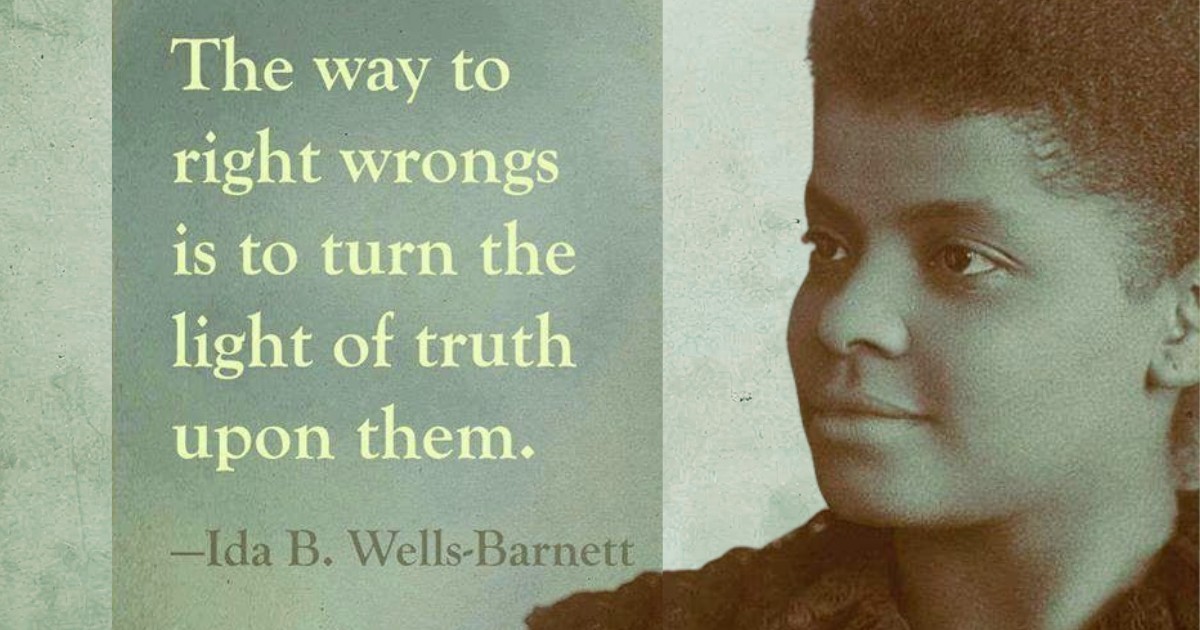
“The way to right wrongs is to turn the light of truth upon them.”
– Ida B. Wells, journalist, anti-lynching crusader.
This quote from Ida B. Wells-Barnett is deceptively simple. Wells-Barnett’s prolific work as an investigative journalist, antilynching crusader, historian and activist helped to shine international attention to the lynching of Black Americans and other key civil and human rights issues. Her work campaigning against lynching used journalism as a tactic. Wells championed a new format to quickly spread word on the atrocities of lynching: sharing her first-hand accounts in printed pamphlets that circulated widely. Awareness spread quickly and the gruesome details influenced the passage of anti-lynching legislation and more widespread hate for the practice. This narrative shaping by Wells helped to lead to a semblance of justice for the victims and eventual legislation and social changes that led to the outlawing of the practice of lynching.
As Media 2070 commemorates Black Narrative Power Month, we highlight Ida B. Wells as an example of the power of media-making to enact widespread change. Wells and other pioneers of movement journalism show us exactly what we mean by Black Narrative Power.
Economic and political power cannot be won without cultural power. The purpose of media, art, and culture is to deliver and reinforce the social narratives which can perpetuate or disrupt power systems. Thus, when we at Media 2070 discuss Black Narrative Power, we mean the ability and access of Black peoples and Black institutions to develop and distribute media, art and culture. Indeed, the role of Black independent media makers from the inception of the Black Press to today have served to self-determine Black identities, assert Black people’s humanity, express and reflect Black art and literature and speak truth to power with regard to the news of the day and its relevance to the condition of Black people. The impacts of those early newspapers were far-reaching and galvanized national momentum and international solidarity in the movements for Black liberation, decades before the Emancipation Proclamation.
This power building is more important now than ever, as we are witnessing the near total elite capture of American news and entertainment media. While these maneuvers are a devastating revelation for many, Media 2070’s analysis has named the extractive origins and ongoing harmful practices of our dominant media systems clearly in need of a full overhaul. Mainstream media practices are have caused and are causing so much ongoing harm and damage that the lived experiences of Black people across the nation are shaped by the very negative stereotypes media perpetuates.
Now that the very definition of “free speech” is threatened by corporate elites in collusion with government leaders responsible for protecting that very right, the role of ethnic media, independent journalists, community publishers and media creators are not only serving their audiences, but at this moment, may be the only sources of media not controlled by these corporate interests. These captured institutions are in the pockets of elites and poised to control meaning-making in our society with the military precision of a weapon of mass destruction. The Kenyan intellectual Ngugi wa Thiong’o wrote in Decolonising the Mind, The Politics of Language in African Literature –
“The effect of the cultural bomb is to annihilate a people’s belief in their names, in their languages, in their environment, in their heritage of struggle, in their unity, in their capacities and ultimately in themselves. … It even plants serious doubts about the moral righteousness of struggle. Possibilities of triumph or victory are seen as remote, ridiculous dreams. The intended results are despair, despondency and a collective death-wish.”
To be sure, the onslaught of propagandized state media, erasure of Black history from public spaces, AI digital caricatures and firing of Black journalists from nearly every national broadcast news platform are indeed cultural bombs meant to stifle resistance and demoralize anyone that does not fit into the narrow confines of their definition of ‘American’. And yet, we persist in our resistance.
Media 2070 has named 5 tenets of Black Narrative Power. They are Resistance, Care, Love, Beauty and Abundance: Resistance as our Black Media history is rooted in the forging of Black struggles. Care, because as we build new media systems, we must operate with a culture of care both in the stories we tell and for one another. Love, a most necessary component as we invite everyone to use their radical imaginations to dream up a media that LOVES Black people. And finally, abundance, as the concept of media reparations unlocks our ability to believe that there is more than enough, and that we can boldly demand a future where no one goes without.
As a result of marginalization from traditional journalism, resources and policy neglect, The Black Press and other ethnic media forged an indelible path to serve their communities. At this pivotal moment, Black independent media and community information networks are once again in the position of serving as a last line of defense for reliable, quality news and information. In effect, these institutions are now best positioned to inform and engage the communities most at risk about the constitutional crisis facing American democracy.
How can we then build and grow Black Narrative Power?
We must support independent Black owned media, artists and creators. Subscribing to local independent and nonprofit outlets like Amsterdam News, MLK50, Black WallStreet Times, The Triibe, The Philly Download, Baltimore Beat and the Kansas City Defender. Check out digital first outlets and new media like PushBlack and newly acquired The Root and listen to and support radio stations such as KBLA. Support, and participation is an excellent way for individuals to help ensure that the institutions and individuals can continue to deliver quality media. The structural solution is Media 2070’s call for media reparations, truly reparative policies and practices such as those undertaken by the Guardian UK, to both reckon with and redress antiBlack media harm. A redistribution of the billions in resources generated by media, art and culture would ensure that Black communities have the means to own and control our narratives from ideation to creation, through distribution. This is the abundant future Media 2070 invites you to work towards along with us, and we will champion Black Narrative Power to achieve such a future.
Join Us.